In Whose Image?
God Creates humanity... and humankind "creates" God...
It has been said that God created humanity in God’s own image, and we human beings have been returning the favor ever since! I have certainly seen plenty of evidence to back up this idea. Warlike people worship a warlike God. Dualistic people worship a dualistic God. Angry, enraged people worship a wrathful God. And on and on it goes.
Author and Episcopal priest Tara Soughers understands that the principle of “image and likeness” certainly impacts not only how we understand God, but also how we human beings understand ourselves:
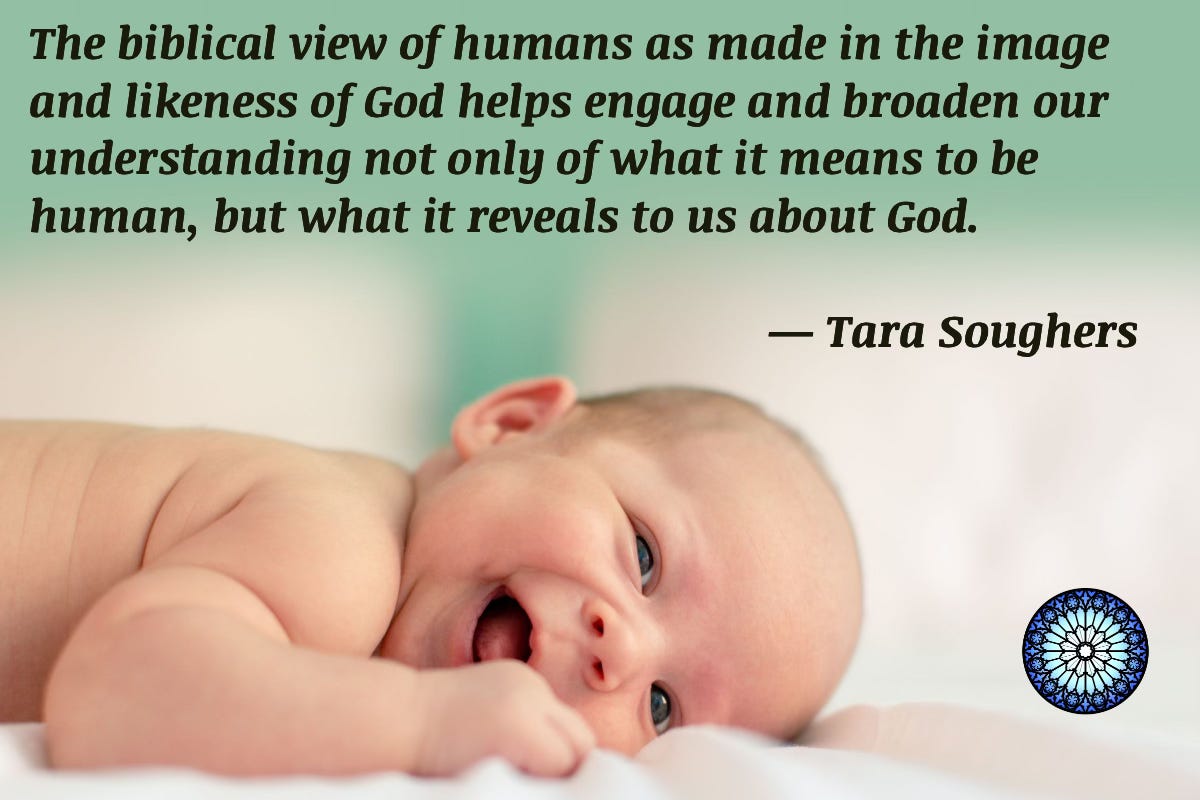
The biblical view of humans as made in the image and likeness of God helps engage and broaden our understanding not only of what it means to be human, but what it reveals to us about God. — Tara Soughers
Is it inevitable that we will see ourselves in our image of God? Part of me thinks this is a problem: how can I ever truly hope to know God if I can’t even strip away my own narcissistic projections onto God? But then I remember to breathe gently and to let go of my deep-seated tendencies for self-judgment. What if it’s really okay that we tend to project ourselves onto God? What if, far from being a problem, that human tendency represents a tremendous opportunity, a doorway into divine intimacy?
It’s also been said that God is a God who hides (Isaiah 45:15), that God’s divine thoughts are not the same as our mortal human thoughts (Isaiah 55:8). But can’t we also humbly acknowledge that we are always a mystery even to ourselves? We never fully understand our motivations, our deepest hopes and fears, or the blind spots in our psyches. There’s a reason why it’s called the “unconscious.”
The mystical journey is a path of trusting the ways we don’t fully know God — or ourselves. The fact that our image of God gets tangled up in our self-image is not a limitation on God, but rather an invitation into intimacy. Even if we project all our worse impulses onto God, there is still room in God’s deep mystery for grace to work: transforming our image and understanding of God, and then transforming our self-image as well. When our image of God becomes more fully faithful to love, then we might find out that the Holy Spirit has been at work in our hidden places as well: making us kinder, gentler, more compassionate, more loving beings — just like God.
Quotation soure: Tara Soughers, Beyond a Binary God: A Theology for Trans* Allies (Kindle Edition), p. 17).